Articles
Garlic in Ayurveda: From Ancient Texts to Modern Research
How garlic was described in ancient Ayurvedic texts, why it was associated with digestion, Vata, the heart, and Rasayana, and what modern research says about its properties today.
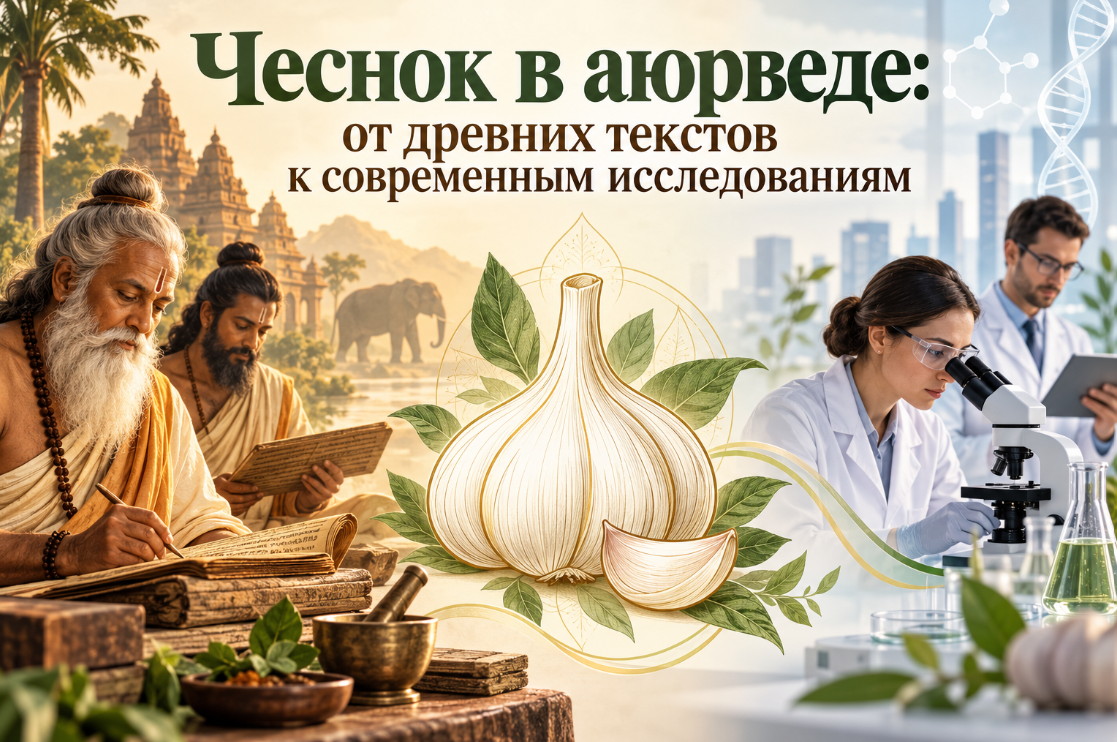
Garlic in Ayurveda: From Ancient Texts to Modern Research
Garlic is so familiar in our cuisine today that it is hard to perceive it as a medicinal plant. However, for thousands of years it has also been used for medicinal purposes. The therapeutic use of garlic was documented in India, Egypt, Greece, Rome, and China, with various cultures attributing to it not just one specific effect but a wide range of properties.
In Ayurveda, garlic holds a particularly interesting place. It is considered both food and a medicinal plant, used for certain diseases and as part of a broad system for strengthening and restoring the body. This is why its history reveals one of the characteristic principles of Ayurvedic medicine: the properties of a product were evaluated not by themselves but depending on the person's condition and the purpose of its use.
Modern science views garlic differently. Instead of traditional categories, it studies the chemical composition of the plant, individual preparations, and measurable results — for example, changes in blood pressure, cholesterol, or glucose levels. These two approaches cannot be mechanically equated but can be considered side by side: first to understand why garlic was used in Ayurvedaand then to see what is known about these and other properties today.
What Medicinal Properties Were Attributed to Garlic in Ayurveda
In classical and later Ayurvedic literature, garlic was used in several main directions:
-
to improve appetite and digestion;
-
to harmonize Vata — one of the three doshas, the traditional principles Ayurveda uses to describe the body's function and condition; including for some conditions accompanied by pain and difficulty in movement;
-
to relieve cough and breathing difficulties;
-
for certain parasitic and skin diseases;
-
to have a beneficial effect on heart function;
-
to strengthen physical strength and restore the body, including as part of rasayana (rejuvenation therapy).
Such a list may seem too broad if garlic is perceived as a plant with one active substance and one target. But Ayurvedic medicine explained it differently: it first described the properties of the plant itself and then matched them with the person's condition. To understand the basis of these prescriptions, it is necessary first to understand how garlic was regarded in this system.
Laśuna and Rasona: How Ayurveda Describes Garlic
In Sanskrit medical texts, garlic — Allium sativum — most often appears under the names Laśuna — Laśuna and Rasona — Rasona. These are not different plants or different types of garlic but traditional names for the same plant. Among other names are, for example, Ugragandha and Arishta.
The name Rasona is traditionally explained through the word rasa — 'taste.' Garlic is attributed five of the six tastes used in Ayurvedic classification: pungent, bitter, sweet, salty, and astringent; the sour taste is considered absent. Taste was important not only for describing food: it was used along with other plant properties to judge its effect on the body.
Here it is necessary to introduce several Sanskrit terms that further help understand the medicinal uses of garlic. Its oiliness and heaviness relate to gunas — the qualities of a substance, while the warming effect is described through virya — a term denoting the strength and nature of a substance's action after consumption, primarily its warming or cooling effect, and vipaka — the effect attributed to it after digestive transformation.
These concepts were not used for classification as such. The physician compared the properties of the remedy with the manifestations of the disease and the person's condition. Therefore, the description of garlic as warming and oily becomes clear only when we move on to specific cases of its use.
Improvement of appetite and digestion
One of the main uses of garlic was to improve appetite and digestion. In Ayurveda, it was used for conditions associated with weakened digestion, since the texts describe garlic's ability to enhance agni — the "digestive fire."
By agni we do not mean a separate function of the stomach or the amount of gastric juice secreted. It is a broader concept describing the body's ability to digest food and use the substances obtained from it to nourish the tissues. Therefore, enhancing agni meant not just the appearance of appetite but an improvement of the entire digestion process.
Such use is also found in specific medicinal formulations. In "Charaka Samhita", for example, a preparation is described in which garlic was prepared with milk and water and used for certain digestive disorders and Vata conditions. This shows that it was no longer about garlic as a spice but a specially prepared medicinal remedy.
Harmonizing Vata, reducing pain, and easing movement
Another important direction was the use of garlic for Vata disorders.
Vata is one of the three doshas, the traditional principles Ayurveda uses to describe various functions and states of the body. Among Vata's qualities are coldness, dryness, and mobility; it is also associated with movement processes in the body.
This makes it clearer why garlic's warming effect is so often mentioned when discussing Vata. Garlic was considered hot and oily, meaning it was attributed qualities opposite to the coldness and dryness of Vata. Therefore, it was used to balance it.
However, Vata disorders were not limited to the sensation of cold. They also included some painful conditions where movement became difficult for the person. Therefore, garlic was also used for pain and difficulty in movement, including conditions affecting the joints and lower back area.
It is important here to maintain the sequence of traditional explanation. Garlic was used not because any warming remedy should relieve any pain. It was chosen because the combination of its properties was considered suitable for conditions that Ayurveda classified as Vata disorders. In "Charaka Samhita" garlic is explicitly mentioned among remedies used for Vata disorders.
Cough and difficulty breathing
Another application was the use of garlic for cough and difficulty breathing. Such indications appear in traditional descriptions of the plant alongside runny nose and some other respiratory diseases.
The mere presence of this indication in Ayurvedic texts does not answer the question of how effective garlic is for a specific modern diagnosis. Cough can arise from very different diseases, so the ancient recommendation cannot be automatically applied, for example, to bronchitis, pneumonia, or asthma.
Nevertheless, this is an important part of garlic's history: the use of the plant for cough and difficulty breathing was a consistent direction in traditional practice. Later we will see that modern science has studied some respiratory uses of garlic, although the evidence here is less than in studies of cardiovascular indicators.
Parasitic and skin diseases
In Ayurvedic literature, garlic was also used for certain parasitic and skin diseases. In "Charaka Samhita" its traditional uses directly mention worm infestations and skin diseases.
This point is especially easy to interpret retrospectively. Today it is known that some garlic compounds have antimicrobial activity in laboratory experiments, so there is a temptation to explain the ancient use by this mechanism.
Such an explanation would be too straightforward. Ayurvedic physicians did not know allicin — a compound formed in garlic after its cells are damaged and today linked to part of its antimicrobial activity — bacteria, or modern infection mechanisms. They relied on their own system of observation and classification. Therefore, traditional use for skin or parasitic diseases and modern research on antimicrobial properties should be seen as two different lines that may intersect but do not prove each other.
Beneficial effects on heart function
Garlic was also attributed a beneficial effect on the heart. For this, the Ayurvedic terminology uses the word Hridaya — this is how a remedy considered beneficial for the heart and its function is characterized.
It is important to understand the meaning of this definition in its historical context. The term Hridaya does not mean that ancient physicians were aware of LDL cholesterol, arterial stiffness, or the mechanisms of atherosclerotic plaque formation. It is a traditional description of the plant's action.
Interest in this property is especially high because the cardiovascular field later became one of the most studied areas in modern science. Today, the effects of garlic preparations can be evaluated by specific parameters — blood pressure, blood lipids, and other indicators. But these modern measurements add new knowledge rather than translate the ancient term Hridaya into the language of contemporary cardiology.
Strengthening physical forces and restoring the body
Besides use for specific diseases, garlic was attributed a strengthening effect. For such remedies, the term balya is used — meaning a remedy that should support or increase physical strength.
The concept of a strengthening effect naturally takes us beyond treating a single symptom. If a plant is used not only for a particular illness but also to restore a weakened body, it begins to intersect with another important branch of Ayurveda — rasayana.
Rasayana is often translated as "rejuvenation," but this is too narrow. It includes ideas about restoring the body, fully nourishing tissues, preserving strength and functions with age, and maintaining longevity. It is in this broader sense that garlic was classified as a rasayana remedy.
Why did such an ordinary product end up in this category? In Ayurvedic understanding, its properties formed a unified picture: improved digestion was supposed to aid full nourishment of the body, the strengthening effect — the restoration of strength, and use in certain Vata disorders — the maintenance of mobility and activity. Therefore, garlic was perceived not only as a remedy against a specific disease but also as a plant capable of participating in the body's restoration.
Garlic as food and medicine in other medical traditions
This dual status of garlic — between food and medicine — existed not only in India.
Medical historian Richard Rivlin describes its medical use in Ancient Egypt, Greece, Rome, and China. In several cultures, garlic was given to people engaged in heavy physical labor because it was believed to help maintain strength and work capacity.
Historian of ancient medicine Lawrence Totelin shows that in ancient Greek medical texts, the boundary between food and medicine was generally much less clear than it is today. Garlic could be consumed as a regular food and simultaneously used for therapeutic purposes. Its effects were evaluated depending on preparation and the person's condition.
This comparison is interesting not because different ancient cultures supposedly independently "proved" garlic's medicinal properties. Historical evidence does not replace clinical research. It shows something else: for a very long time, people observed the same plant and used it not only for flavor.
Modern science allows us to ask the following question much more precisely: what exactly in garlic can affect the body and why do different forms of garlic produce different results?
What happens to garlic after crushing
The chemical composition of garlic begins to change the moment we cut or crush a clove.
In intact tissues, the substances alliin and the enzyme alliinase are largely separated. When cells are damaged, they interact, and allicin is formed — one of the best-known sulfur-containing compounds in garlic.
Allicin is chemically unstable. After formation, it gradually converts into other sulfur-containing compounds. Therefore, the composition of garlic after crushing is no longer the same as it was inside the whole clove.
Further processing changes it even more. Heating, drying, long storage, and extraction methods affect which substances are preserved and in what amounts. Aged garlic extract, for example, differs noticeably from fresh crushed garlic; one of its characteristic stable compounds is S-allylcysteine.
This difference is directly relevant for evaluating studies. If a clinical trial was conducted with a specific standardized extract, its results primarily apply to that preparation. It cannot be automatically assumed that a raw garlic clove, garlic oil, or any other product labeled "garlic" will have the same effect.
What modern research shows
The clinical literature on garlic is quite extensive but unevenly distributed. The most data have been accumulated on cardiovascular and metabolic indicators; noticeably less on colds, infections, and many other popular uses.
One of the largest modern reviews was published in Nutrition Reviews in 2026. The authors combined 108 randomized studies with 7,137 participants. On average, the use of garlic was accompanied by small but statistically significant changes in several indicators: total and LDL cholesterol, triglycerides, fasting glucose levels, and blood pressure.
However, the average result of such a review should not be perceived as an effect that every individual will necessarily experience. Participants received different forms of preparations—from powder and oil to aged extract—in varying dosages and for different durations. Powder, oil, and extract are not interchangeable products: they differ in chemical composition, content of active compounds, and consequently, their possible effects on the body. Additionally, participants had different baseline health indicators and concurrent treatments. Therefore, the average result of the meta-analysis cannot be directly applied to a specific person: it shows a general trend, not a guaranteed effect for everyone.
Garlic and blood pressure: research results
In meta-analysis of 2026, published in the journal Nutrition Reviews, combined data from 108 randomized controlled trials involving 7,137 people. In each original study, participants were randomly assigned to different groups: one received a garlic preparation, and the other a placebo. Random allocation is necessary to ensure that groups are comparable on average in terms of age, health status, and other factors that may influence the outcome.
The placebo was a substance resembling the tested preparation but without its active garlic component. Participants did not know what they were receiving. In double-blind studies, even the researchers assessing the results were unaware. This approach allowed separating the effect of the garlic preparation from the placebo effect.
Then, in each study, changes in indicators between groups were compared, for example, the difference in blood pressure before and after the intervention. After that, the results of individual studies were statistically combined.
In the large meta-analysis, the average reduction in systolic pressure was about 3.7 mm Hg, and diastolic pressure about 2 mm Hg . However, in some smaller studies, the results were noticeably higher.
For example, in Australia, the effect of aged garlic extract was studied on 79 volunteers with inadequately controlled elevated systolic blood pressure. The study lasted 12 weeks, with the garlic preparation used in addition to already prescribed treatment, not instead of it.
Participants were randomly divided into several groups. Some received aged garlic extract in different dosages, while the control group received similar capsules without the active garlic extract to account for the placebo effect.
The study was also double-blind: neither the participants nor the researchers directly working with them knew who received the garlic extract and who received the control capsules. This approach reduces the influence of expectations from both sides on the results.
In the group taking two capsules of aged garlic extract daily, the average reduction in systolic blood pressure compared to placebo was about 9.7 mm Hg when analyzing all participants. After excluding several participants who changed their primary treatment or had compliance issues during the study, the calculated difference reached 11.8 mm Hg
At the same time, increasing or decreasing the extract dosage did not show such a convincing blood pressure reduction. Therefore, the study cannot conclude that 'the more garlic, the lower the blood pressure.' It shows a narrower finding: a specific dosage of a particular preparation produced a noticeable result in a small group of people, while the average effect across studies was significantly more modest.
Cholesterol and other blood lipids
A similar situation is observed with blood lipids.
A 2024 meta-analysis combined 21 randomized studies of people with lipid metabolism disorders. On average, garlic use was associated with reductions in total cholesterol, LDL cholesterol, and triglycerides. LDL and HDL are lipoproteins that carry cholesterol in the blood. LDL cholesterol is usually called 'bad' cholesterol because its elevated levels are linked to atherosclerosis development. HDL, on the other hand, is often called 'good cholesterol' because these particles help transport cholesterol from tissues back to the liver. The results also depended on the form of the garlic preparation.
A larger 2026 meta-analysis also found a small average reduction in total cholesterol, LDL, and triglycerides, and a slight increase in HDL.
This is one of the cases where modern research truly concerns the same body system that interested Ayurvedic medicine when describing garlic as beneficial for the heart. But similarity in direction does not mean identical explanations.
The concept Hridaya originated in a medical system that evaluated a remedy’s effect not by a single laboratory marker but through a combination of signs of a person’s condition and changes in bodily functions. Modern medicine uses a different approach: it can separately measure LDL, HDL, blood pressure, and other parameters and assess how exactly they change under the influence of a specific preparation. Therefore, these two observation methods should not be opposed as 'ancient' and 'modern' in terms of less or more advanced. They view garlic’s effects from different perspectives: Ayurveda as part of the overall state of the body, modern research through individual measurable indicators.
Glucose and metabolism
Another direction of modern research is glucose metabolism.
In a 2024 meta-analysis Garlic preparations on average reduced fasting glucose levels and glycated hemoglobin HbA1c — a marker that reflects the average glucose level over the preceding months. The authors also found changes in total and LDL cholesterol; however, this analysis did not show a statistically significant reduction in triglycerides.
One should not automatically associate changes in metabolic markers with weight loss. In a large 2026 meta-analysis no statistically significant overall effect of garlic on body weight was found.
Therefore, to date, data on glucose and lipids alone do not provide grounds to call garlic a weight loss remedy.
Allicin and antimicrobial action
One of the most studied compounds in garlic today is allicin.
In laboratory experiments, this compound can disrupt the function of important bacterial proteins. For example, a 2016 study showed that allicin reacts with specific sites on Escherichia coli proteins, thereby disrupting the activity of several of its enzymes.
Such results have contributed to the popular notion of garlic as a "natural antibiotic." However, it is important to distinguish laboratory activity of the substance from treating infections in humans..
The fact that allicin acts on bacteria in the lab does not necessarily mean the same effect occurs in the human body. It is necessary to determine whether the substance reaches the target tissues at sufficient concentrations and whether its use leads to actual improvement in the patient's condition.
This is something a laboratory experiment alone cannot demonstrate.
Therefore, the antimicrobial properties of allicin are of serious scientific interest. But at present, garlic cannot be considered a substitute for antibacterial drugs when such medication is truly needed.
Garlic for colds: reputation exceeds evidence
Traditional use of garlic for coughs, and later its popularity as a remedy for colds, prompted clinical research.
A Cochrane review found eight potentially suitable studies, but only one met established criteria. It involved 146 participants: half took a garlic supplement for 12 weeks, while the other half received control capsules without active garlic components. The garlic group experienced fewer cold episodes.
However, one study is insufficient for a reliable conclusion. Therefore, the review authors concluded that clinical data are currently insufficient to confidently claim garlic’s effectiveness for preventing or treating the common cold. The current NCCIH fact sheet also characterizes the evidence in this area as limited.
Thus, traditional use here has a much longer history than the modern evidence base.
Garlic and cancer research
Interest in garlic in oncology arose partly because its sulfur-containing compounds can influence cellular processes in laboratory experiments. But effects on cells and cancer prevention in humans are entirely different levels of evidence.
Especially interesting clinical data were obtained in China in a long-term study of residents in a region with a high risk of stomach cancer.. The study included 3,365 people. Among several interventions, garlic extract and garlic oil were also studied, which participants took for 7.3 years. Follow-up continued for more than two decades.
The results were ambiguous and therefore particularly informative.
In the garlic supplement group, no statistically significant reduction in new cases of stomach cancer was observed.In other words, the study does not support the claim that garlic supplements prevented the disease.
At the same time, mortality from stomach cancer in the group receiving garlic preparations was lower. The adjusted relative risk of death was about 0,66This means that the risk of death from stomach cancer in this group was approximately 34% lowerthan in the control group.
These two results must be considered together. The incidence of disease and mortality from it are not the same. Therefore, the study cannot be summarized simply as "garlic prevents cancer."
It would be equally incorrect to conclude from the reduced mortality that garlic can treat an existing tumor. The study was preventive, conducted in a specific population, and examined particular garlic preparations over many years.
This result clearly illustrates why scientific articles use cautious wording.
How modern European phytotherapy views garlic
In modern European phytotherapy, garlic continues to be regarded as a medicinal plant raw material. European Medicines Agency — EMA — has prepared for the bulb Allium sativum a European herbal monograph. It covers garlic preparations traditionally used for circulatory disorders and cold symptoms.
At the same time, the significance of such a monograph can easily be misunderstood. EMA distinguishes herbal medicines with well-established medical use from those whose use is recognized as "traditional".For garlic, the indicated uses belong precisely to the second category: they are primarily based on a long history of use rather than on evidence of the same strength required to recognize well-established clinical efficacy. This is explicitly stated in the current final monograph for traditional indications.
This approach clearly shows the difference between the history of a plant's use and modern proof of its effects. The inclusion of garlic in the official European monograph confirms the existence of a stable medicinal tradition and sets requirements for specific preparations, their safety, and use. But the monograph itself does not turn every historical belief about garlic into proven clinical effect.
In 2025 EMA published a draft of the first revised version of this monograph. The public consultation ended on July 15, 2025, but as of September 2026, the final revised version has not yet been published: the 2020 final monograph remains in force, and the 2025 document has draft status.
At the same time, the draft itself allows understanding the position EMA proposes to maintain. Garlic still belongs not to medicines with well-established medical use but to the category of traditional herbal medicinal products. The draft lists two uses: as an adjunct for the prevention of atherosclerosis and for relieving symptoms of the common cold.
Safety: when a familiar product becomes a medicinal product
Millions of people consume garlic daily as food, but ordinary culinary use of garlic and taking concentrated garlic preparations or extracts are not the same. If a person takes such preparations for therapeutic purposes, they should use them carefully and consult a doctor if necessary.
What do we ultimately know about garlic
The history of garlic is interesting primarily because it allows us to see two different ways of studying one plant.
Ayurveda described garlic through its taste, warming and oily qualities, its influence on agni and Vata, its ability to support the heart, physical strength, and body recovery. These concepts determined in which conditions the plant was included in food or medicinal formulations and why it was also classified among rasayana remedies.
Modern science asks different questions. It studies specific compounds of garlic, compares fresh product, powder, oil, and aged extracts, and evaluates effects by measurable indicators. That is why today we can speak not just about the "benefits of garlic" but separately about its possible effects on blood pressure, blood lipids, glucose, microorganisms, or other processes.
In some areas, the data are already quite extensive. The most consistent clinical research shows small average changes in blood pressure and lipid parameters; there are also data on glucose levels. However, even here the result depends on the form of the preparation, dosage, duration of the study, and participants' condition.
In other areas, evidence is much more limited. The antimicrobial action of allicin is well studied in the laboratory, but this does not yet allow conclusions about garlic's effectiveness as an infection treatment in humans. Studies on colds are still insufficient for a confident conclusion. Oncology research provides some interesting results but does not allow us to speak of garlic as a proven means of cancer prevention or treatment. A summary assessment NCCIH also emphasizes that the degree of evidence for different uses of garlic varies significantly.
Therefore, comparing Ayurveda and modern science becomes meaningful precisely when we do not try to forcibly reduce them to one language. Ayurvedic texts help us understand how garlic was used and what properties explained its application. Modern research answers a different question: which specific effects of certain forms of garlic can be detected and reproduced today.
This approach does not require declaring ancient concepts proven solely based on their age, nor rejecting them as irrelevant. It allows preserving the historical meaning of the tradition while clearly seeing the boundary between traditional use, biologically plausible mechanisms, and confirmed clinical results.
Garlic in ancient Ayurvedic texts: several important shlokas
Information about garlic use in India has been preserved both in later commentaries and directly in classical medical texts in Sanskrit, created and revised over many centuries. Several fragments particularly well show how the understanding of garlic changed and simultaneously remained consistent.
"Charaka Samhita" — the first centuries before and after the beginning of our era
"Charaka Samhita" was formed based on an even earlier medical tradition; the edition associated with Charaka is usually dated approximately to the period from the 1st century BCE to the 2nd century CE, although the text continued to be edited later.
In Sūtrasthāna 27.176 garlic — laśuna — is described as follows:
क्रिमिकुष्ठकिलासघ्नो वातघ्नो गुल्मनाशनः ।
स्निग्धश्चोष्णश्च वृष्यश्च लशुनः कटुको गुरुः ॥
Krimi-kuṣṭha-kilāsa-ghno vāta-ghno gulma-nāśanaḥ…
In a sense translation: garlic is attributed with action against parasitic and skin diseases, Vata conditions, and some abdominal disorders; it is characterized as oily, warming, pungent, and heavy.
In In another place in the "Charaka Samhita" a specific medicinal preparation method is described: peeled garlic was boiled with milk and water. The resulting remedy was used, among other things, for Vata conditions, sciatica, swelling, and heart diseases.
Thus, already in the "Charaka Samhita," garlic is presented not merely as a food product, but as a full-fledged medicinal remedy included in a system of specific therapeutic prescriptions and preparation methods.
"Lashuna Kalpa" and the Bauer manuscript — approximately 4th–6th centuries
A particularly interesting historical monument is the Bauer manuscript, found in Central Asia at the end of the 19th century. Its dating is debated: researchers place it roughly between the second half of the 4th century and the beginning of the 6th century AD.
The first part of the manuscript is an independent text dedicated to garlic — Laśuna-kalpa. It describes the properties of garlic and various methods of preparing medicinal formulations. Researchers count dozens of verses in this part devoted specifically to garlic.
The very fact of the existence of a separate treatise on laśuna is historically important: by this time, garlic was no longer a random ingredient but an independent object of medical description.
Vagbhata, "Ashtanga Hridaya" — 7th century
Vagbhata is usually attributed to the 7th century AD. In Aṣṭāṅga Hṛdaya, Sūtrasthāna 6.109–111 the description of garlic becomes even more detailed:
हृद्यः केश्यो गुरुर्वृष्यः स्निग्धो रोचनदीपनः ।
Hṛdyaḥ keśyo gurur vṛṣyaḥ snigdho rocana-dīpanaḥ…
Here garlic is called Hridaya — beneficial for the heart, as well as oily, strengthening, and improving appetite and digestion.
The description ends with a word especially important for our article:
…हन्ति रसायनम् ॥
That is, garlic is also included in the context of rasayana — means and practices related to maintaining strength and restoring the body.
This is a direct historical source for the properties of garlic we discussed earlier: digestion, heart, Vata, physical strength, and rasayana turn out not to be a later interpretation but part of the very classical text itself.
"Kashyapa Samhita": a separate chapter dedicated to garlic
In Kāśyapa Saṃhitā an entire chapter is devoted to garlic — Laśuna-kalpaOne should be cautious with the dating of this text: the tradition underlying it is considered ancient, but the "Kashyapa Samhita" that has come down to us is incomplete and has been repeatedly revised, so attributing a specific shloka to a precise century would be unreliable.
That makes the text itself all the more interesting. It says:
आयुष्यं दीपनं वृष्यं… स्मृतिमेधाबलवयोवर्णचक्षुःप्रसादनम्
In other words, garlic is attributed properties related to longevity, digestion, strength, memory, and maintaining the body's condition.
Elsewhere in the same chapter, there is a vivid line:
अमृतोद्भूतममृतं लशुनानां रसायनम्
In essence: garlic is described as a rasayana and figuratively associated with amrita — the "nectar of immortality."
This, of course, is the language and imagery of the oldest medical tradition. But that is precisely why the quote is interesting: it shows how highly garlic was valued within this system.
Bhavamishra, "Bhavaprakasha Nighantu" — 16th century
Many centuries later, garlic remains an important medicinal plant. In the 16th century, Bhavamishra includes it in Bhāvaprakāśa Nighaṇṭu — one of the well-known Ayurvedic pharmacopeias of medicinal substances.
It is here that the traditional explanation of the name is especially clearly formulated: Rasona:
पञ्चभिश्च रसैर्युक्तो रसेनाम्लेन वर्जितः ।
तस्माद्रसोन इत्युक्तो… ॥
That is: "It has five tastes but lacks sour; therefore, those who know the properties of substances call it Rasana."
The following shlokas again describe garlic as warming and strengthening, associating it with digestion, the heart, and rasayana.
Thus, we observe a long historical line before us. From early Ayurvedic collections to 16th-century medical texts, garlic continues to be described both as food and as a remedy with specific medicinal or healing properties. Formulations, classifications, and methods of use have changed, but many themes— digestion, Vata, the heart, physical strength, and rasayana —are repeated in texts separated by centuries.
Main sources
Charak Samhita Research, Training and Skill Development Centre. Lashuna (Allium sativum L.). A modern Ayurvedic database with references to classical texts, traditional names, properties, and areas of garlic application.
"Charaka Samhita", Sutra Sthana 27.176 and Chikitsa Sthana 5.91–95. Description of garlic's properties, its use in Vata disorders, skin and parasitic diseases, and a healing preparation with milk.
Aṣṭāṅga Hṛdaya, Sūtrasthāna 6.109–111. A classical description of garlic, including its characteristics Hridaya, balya and mention of rasayana.
Kāśyapa Saṃhitā, Kalpasthāna, Laśuna-kalpa. A chapter dedicated to garlic, its properties, uses, and rasayana.
Bhāvaprakāśa Nighaṇṭu, section on Laśuna/Rasona. Classical description of the name Rasona, the five tastes, and properties of garlic.
Natsume Y. Garlic (Laśuna) as Described in the First Part of the Bower Manuscript, the Laśuna-kalpa. The Japanese Journal for the History of Pharmacy, 2017. Study of the section Laśuna-kalpa Bauer's manuscript and the medical use of garlic in ancient India.
Rivlin R. S. Historical Perspective on the Use of Garlic. Journal of Nutrition, 2001. Historical overview of the medical use of garlic in India, Egypt, Greece, Rome, and China.
Totelin L. When Foods Become Remedies in Ancient Greece: The Curious Case of Garlic and Other Substances. Journal of Ethnopharmacology, 2015. Study of the position of garlic between food and medicine in ancient Greek medicine.
Lawson L. D., Hunsaker S. M. Allicin Bioavailability and Bioequivalence from Garlic Supplements and Garlic Foods. Nutrients, 2018. Study of allicin formation and differences between dietary forms of garlic and garlic preparations.
Behrouz V. and co-authors. Effects of Garlic Supplementation on Cardiovascular Risk Factors in Adults: A Comprehensive Updated Systematic Review and Meta-Analysis of Randomized Controlled Trials. Nutrition Reviews, 2026. Meta-analysis of 108 randomized studies with 7,137 participants.
Du Y., Zhou H., Zha W. Garlic Consumption Can Reduce the Risk of Dyslipidemia: A Meta-analysis of Randomized Controlled Trials. Journal of Health, Population and Nutrition, 2024. Meta-analysis of studies on garlic in lipid metabolism disorders.
Zhao X., Cheng T., Xia H., Yang Y., Wang S. Effects of Garlic on Glucose Parameters and Lipid Profile: A Systematic Review and Meta-Analysis on Randomized Controlled Trials. Nutrients, 2024. Analysis of the effects of garlic preparations on glucose, HbA1c, and blood lipids.
Ried K., Frank O. R., Stocks N. P. Aged Garlic Extract Reduces Blood Pressure in Hypertensives: A Dose–Response Trial. European Journal of Clinical Nutrition, 2013. A double-blind randomized study of aged garlic extract in people with high blood pressure.
Müller A. and colleagues. Allicin Induces Thiol Stress in Bacteria through S-Allylmercapto Modification of Protein Cysteines. Journal of Biological Chemistry, 2016. Laboratory study of the mechanism of allicin's effect on bacterial proteins.
Cochrane. Garlic for the Common Cold. A systematic review of clinical data on the prevention and treatment of the common cold with garlic preparations.
Li W.-Q. and colleagues. Effects of Helicobacter pylori Treatment and Vitamin and Garlic Supplementation on Gastric Cancer Incidence and Mortality. BMJ, 2019. Long-term follow-up after a randomized preventive study of stomach cancer.
National Center for Complementary and Integrative Health. Garlic: Usefulness and Safety. A comprehensive assessment of current data on the efficacy, adverse effects, and drug interactions of garlic supplements.
European Medicines Agency. European Union Herbal Monograph on Allium sativum L., bulbus. European monograph on garlic medicinal products; current final version and materials for ongoing revision.