Articles
Shatavari in Ayurveda: from ancient texts to modern research
Shatavari in Ayurveda: ancient texts and modern research on lactation, menopause, PCOS, reproductive health, and other properties of the plant.
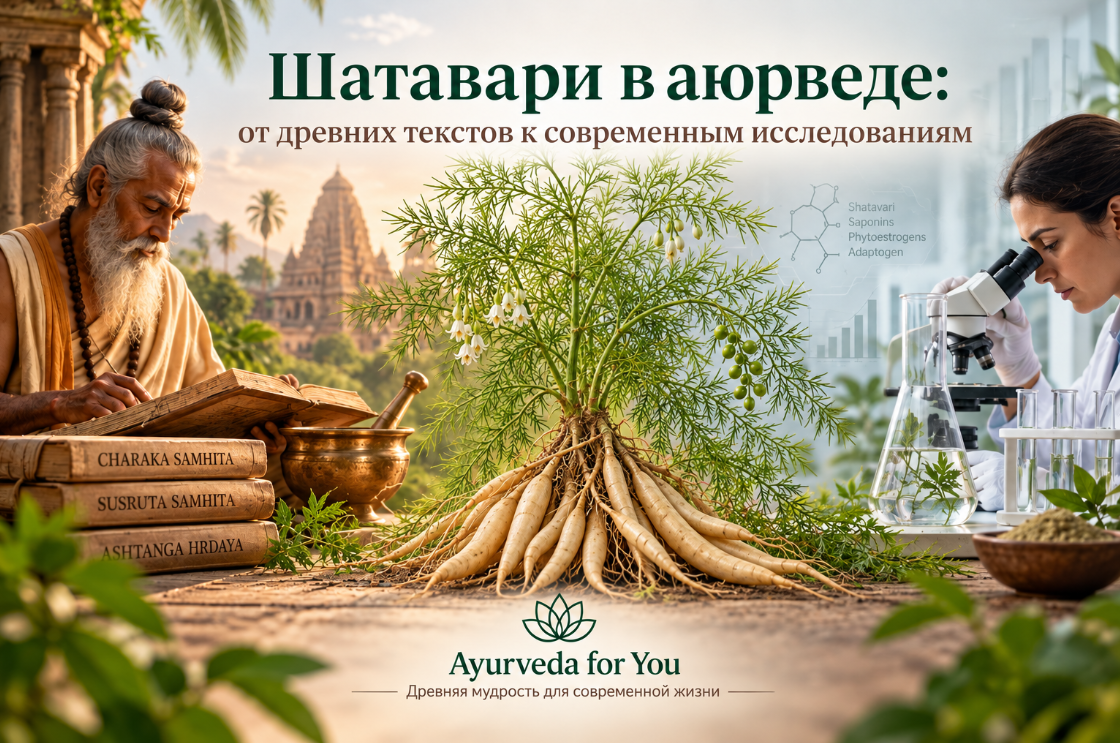
Shatavari in Ayurveda: from ancient texts to modern research
If you just want to understand what shatavari is without a detailed analysis of studies, institutes, and dosages, we explain it in simple language in a separate article.
Shatavari: what it is, properties, and usesand Female libido and shatavari: influence on sexual function
Shatavari is the Sanskrit name of the plant Asparagus racemosus Willd., which in Russian is called asparagus racemosus.It belongs to the same genus Asparagusas the familiar edible asparagus, but is a different species, traditionally used for medicinal purposes primarily for its numerous thickened roots. Although the history of shatavari is especially closely linked to Indian Ayurveda, the plant itself is much more widely distributed—from tropical Africa through South and Southeast Asia to northern Australia.
In Ayurvedic medicine, shatavari has been described for many centuries as a rasayana—a remedy for strengthening and restoring the body, maintaining vitality, preserving youth, and promoting active longevity. The plant has held a particularly important place in treating conditions related to the reproductive system and lactation. These ancient uses are among the most actively researched properties of the plant today.
Why shatavari became one of the main plants of women's Ayurveda
The very name shatavari is traditionally translated as "she who has a hundred husbands"—an image associated with female vitality and reproductive ability. Another explanation of the name relates to the plant's numerous thickened roots, so the literal etymology is not entirely unambiguous. However, in Ayurvedic tradition, the first interpretation became one of the symbols of shatavari's special connection with the female reproductive system.
This connection was explained not only by the name. In Ayurvedic classification, the shatavari root has a sweet and bitter taste, is considered cooling, oily, and heavy, and its post-digestive effect is sweet. This combination of properties was viewed as nourishing, restorative, and capable of reducing conditions associated with excessive dryness, depletion, and heat. Therefore, shatavari was used where it was necessary to support the formation and preservation of bodily fluids and tissues, restore strength after their loss, and calm manifestations of Vata and Pitta.
This was especially evident in the use of shatavari after childbirth and in cases of insufficient breast milk. In classical texts, the plant is included in strengthening formulations, used in the context of pregnancy and postpartum periods, and in the "Sushruta Samhita" it is directly related to remedies that promote breast milk production. Gradually, this combination of strengthening, nourishing, and reproductive system-related effects made shatavari one of the most characteristic plants of Ayurvedic medicine for women.
Shatavari as a rasayana: restoration and nourishment of the body
Although shatavari is especially known for its use in women's Ayurveda, its significance is not limited to this. In classical texts, the plant is included in a broader range of remedies rasayana — a branch of Ayurveda related to restoring the body, maintaining physical strength, fully nourishing tissues, and preserving youth and vitality with age.
In this sense, shatavari was used not only when it was necessary to address a specific symptom but also in states of exhaustion and weakness, when the task was to gradually restore the body's strength.
Such use aligns well with how Ayurveda describes the plant's properties. Sweet taste, oiliness, heaviness, and cooling action were associated with shatavari's ability to nourish and replenish tissues and fluids, especially when their reduction was accompanied by dryness, weakness, or excessive heat. Therefore, it was used in restorative formulations, including after illness, physical exhaustion, and during periods of increased bodily stress.
At the same time, the scope of application was significantly broader than just restoring strength. In Ayurvedic sources, Shatavari is also found in formulations intended for certain digestive disorders, increased acidity, diarrhea, and conditions accompanied by tissue damage or irritation. Thus, the connection of Shatavari with women's health is one of the most important, but not the only, directions of its traditional use in Ayurveda.
Shatavari and the digestive system
One of the notable directions of traditional Shatavari use was the digestive system.In Ayurvedic texts and later practice, the plant was used for digestive disorders, increased acidity, diarrhea, and ulcerative conditions of the stomach and duodenum. This use was primarily associated with the cooling, oily, and soothing properties of Shatavari.
Here it is clear how much importance Ayurveda placed on the properties of a specific plant and the nature of the condition itself. If garlic, which we considered earlier, was described mainly as a warming remedy, Shatavari was classified as a cooling and nourishing plant. This does not mean a simple opposition of the two remedies: the choice depended on a combination of signs, the state of digestion, doshas, and tissues. With Shatavari, special importance was given to its ability to soften dryness, calm excessive heat, and support irritated or weakened tissues.
A special place was occupied by the use of Shatavari in ulcerative conditions. This direction proved to be quite stable and later attracted the attention of researchers: even in modern Indian medicine, studies were conducted to see whether extracts Asparagus racemosus are capable of influencing the protection of the stomach lining.
Other directions of Shatavari use in Ayurveda
The use of Shatavari in Ayurveda was not limited to the reproductive and digestive systems. In classical and later Ayurvedic literature, the plant is also mentioned in connection with cough and some other respiratory disorders, inflammatory conditions, diseases of the urinary system, and certain nervous system disorders. In some cases, Shatavari was part of complex therapeutic formulations with other plants; in others, it was used as one of the main remedies.
Such a wide range of indications becomes clearer if Shatavari is considered not as a plant "for a specific disease," but through the properties attributed to it by Ayurveda. The cooling and soothing effects were used for conditions accompanied by heat and tissue irritation; nourishing and strengthening properties—for weakness and exhaustion; its influence on bodily fluids was taken into account in conditions where dryness or insufficient secretion production played an important role.
Therefore, the same plant could be included in treatment protocols for outwardly very different diseases. For an Ayurvedic physician, the unifying basis was not the modern name of the disease but the nature of the person's condition and the properties of the plant that were supposed to change that condition.
Traditional uses of Shatavari in Ayurveda
If we gather the main mentions of Shatavari in classical Ayurvedic literature and later Indian medical tradition, a fairly wide range of its applications emerges:
-
female reproductive health — for various reproductive function disorders and for general strengthening of the female body;
-
postpartum recovery — as a nourishing and strengthening remedy;
-
lactation — to support breast milk production;
-
fertility — as a remedy traditionally associated with a woman's ability to conceive;
-
certain types of bleeding, including uterine and intestinal;
-
rasayana — for restoring strength, nourishing tissues, maintaining vitality, and in cases of exhaustion;
-
general weakness and physical exhaustion, including during recovery after illness;
-
digestive disorders — dyspepsia, increased acidity, burning, and pain in the stomach area;
-
ulcerative lesions of the stomach and duodenum;
-
diarrhea and dysentery, including with blood admixture;
-
hemorrhoids;
-
certain liver diseases;
-
urinary system disorders, including the presence of blood in the urine;
-
cough and some respiratory diseases;
-
hoarseness and voice disorders;
-
inflammatory processes;
-
some nervous system disorders, especially accompanied by weakness and exhaustion;
-
gout and some conditions that Ayurveda associated with Vata imbalance;
-
certain skin diseases and inflammatory manifestations;
-
some vision disorders, including night blindness;
-
male reproductive health — Shatavari was also used as a tonic and aphrodisiac;
-
maintaining physical strength, overall tone, and body recovery.
This list shows that the traditional use of Shatavari was much broader than its modern image as predominantly a “female plant.” Some of these areas later became subjects of experimental and clinical studies, while others are still mainly known from Ayurvedic sources.
Shatavari beyond Ayurveda
Although the most detailed history of Shatavari’s medicinal use has been preserved in Ayurveda, Asparagus racemosus it was also used in other South Asian medical traditions. The plant is part of the practice of Siddha medicine, which developed mainly in southern India, and Unani — a Greco-Arabic medical system that became widespread on the Indian subcontinent.
Outside India, the folk use of Shatavari is especially well documented in Nepal, where the plant is known by the name kurilo. In various local traditions, the root was used to increase breast milk production, for certain digestive and urinary disorders, jaundice, and other conditions.
The situation with ancient Greece, Rome, and Egypt is different. There was also a very old medicinal tradition of using asparagus, but it primarily concerned a different species — Asparagus officinalis, common asparagus. It was mentioned by Dioscorides and Pliny. However, applying this history to Shatavari would be incorrect: Asparagus officinalis and Asparagus racemosus they belong to the same genus but are different species. Therefore, the Greco-Roman and Egyptian traditions can be seen as an interesting parallel in the history of the genus Asparagus, but not as evidence of ancient use of Shatavari itself outside South Asia.
Chemical composition and biologically active substances of Shatavari
When Shatavari began to be studied in detail by chemical methods, it was found that its roots contain a whole complex of substances: steroidal saponins, flavonoids, polysaccharides, phytosterols, alkaloids, and other compounds.
The greatest attention of researchers was attracted by the plant’s characteristic steroidal saponins, called shatavarins. Today, several such compounds are known — Shatavarin I, IV, V, and others, with Shatavarin IV being especially actively studied. Shatavarin IV.
The word “steroidal” here requires clarification. It describes the chemical structure of the molecules, and does not mean that Shatavari contains human steroid hormones. Nevertheless, the similarity of some plant compounds to steroid structures sparked interest in their possible effects on hormonal and reproductive systems.
For individual components and extracts of Shatavari, anti-inflammatory, antioxidant, immunomodulatory effects, as well as influence on the gastric mucosa, nervous system, and metabolism are also being studied.
Shatavari and menopause: what clinical studies show
One of the most actively researched areas today is the use of Shatavari during perimenopause and after menopause.
In 2024, specialists from Good Life Hospital in Vijayawada, Ravi Nursing Home in Guntur, and Sree Jeevana Ayurveda in Vijayawada conducted a randomized double-blind placebo-controlled study involving 70 women. Research on PubMed
Placebo-controlled study means that one group receives the studied remedy, while the other receives an externally similar preparation without the active ingredient. This allows us to understand whether the result is specifically related to the action of the drug, and not just the participants' expectations.
Double-blind study means that during the experiment, neither the participants themselves nor the researchers observing them know who is receiving shatavari and who is receiving the placebo. This approach reduces the influence of expectations from both sides on the outcome.
Those who took the shatavari extract experienced a reduction in hot flashes, night sweats, sleep disturbances, anxiety and nervousness, vaginal dryness, and decreased libido compared to the placebo group; at the same time, quality of life indicators improved.
In 2025, specialists Tieten Medi City Hospital in Thane, D. Y. Patil University School of Medicine in Navi Mumbai, and Clinsearch Healthcare Solutions in Mumbai conducted another double-blind placebo-controlled study involving 80 women with perimenopausal symptoms. They received 300 mg of standardized shatavari root extract once daily for eight weeks or a placebo. Research on PubMed
Those taking the extract experienced a greater reduction in hot flashes and overall severity of menopausal symptoms, as well as decreased perceived stress. The researchers also evaluated hormonal parameters and safety.
Other clinical studies have also observed a reduction in several menopausal symptoms. However, results regarding sex hormones varied across studies. This is an important observation: improved well-being does not necessarily mean the plant acts as a direct estrogen substitute.
Thus, several independent clinical studies have repeatedly shown the same general signal — shatavari may reduce some symptoms of perimenopause and the postmenopausal period. The clinical effect is already observed, and further research will help clarify the mechanism of action.
Shatavari and lactation: one of the oldest uses is being tested today
The use of shatavari to support lactation is one of the most enduring applications of the plant in Indian medicine. Ayurvedic texts classify the plant as a remedy that promotes breast milk production.
In modern medical literature, such agents are called galactagogues — substances or preparations used to increase breast milk production.
One of the early clinical studies was conducted by specialists from the Institute of Post Graduate Ayurvedic Education and Research in Kolkata. It involved 60 breastfeeding women. The researchers primarily assessed the level of prolactin — a hormone that plays an important role in breast milk production, as well as changes in infant weight and mothers' subjective evaluation of lactation. The shatavari group showed a significantly greater increase in prolactin levels compared to the control group. Research on PubMed
A larger study was published in 2025. The research was conducted by specialists from Trupti Hospital in Thane, Davao Medical School Foundation in the Philippines, Terna Dental College in Navi Mumbai, Prakruti Hospital in Mumbai, and Clinsearch Healthcare Solutions.
A randomized double-blind placebo-controlled trial involved 120 postpartum women. They received 300 mg of standardized shatavari root extract twice daily or a placebo. After 72 hours, researchers measured the amount of expressed milk. Women taking shatavari had a statistically significantly greater volume, and the sensation of breast fullness after feeding occurred sooner. No adverse events were reported. Research on PubMed
There are other clinical studies as well. A 2022 study involving 78 breastfeeding women examined a food product containing shatavari and oats. The average breast milk volume in the group receiving this product was higher than in the control group. However, since shatavari was used together with another component, the entire effect cannot be attributed solely to it. Research on PubMed
The ability of shatavari to support lactation today appears to be one of the clearest examples of traditional plant use being confirmed by modern clinical research. This is no longer a single random result: several studies have again noted increased milk volume, elevated prolactin levels, and other signs of improved lactation.
Shatavari, PCOS, and reproductive function
Another area where traditional use of shatavari is receiving modern clinical validation is polycystic ovary syndrome (PCOS).
This is a common hormonal-metabolic disorder in women of reproductive age, which may be accompanied by irregular menstruation, ovulation disturbances, altered androgen levels, and difficulties conceiving.
In 2025, specialists Vijaya Sai Hospital, Vennela Scan Center and Diagnostics, and Orizin Endocrine Centre in Vijayawada conducted a randomized double-blind placebo-controlled study involving 60 women with PCOS aged 20 to 35 years. Research on PubMed
By the end of the study, the shatavari group showed reductions in average ovarian volume, sizes of cystic formations, and number of follicles; researchers also noted changes in some metabolic parameters and menstrual cycle regularity.
In February 2026, the results of another randomized double-blind placebo-controlled study involving 70 women with PCOS were published. It was conducted by specialists at ZOI Fertility in Mumbai, MGM Medical College and Hospital at MGMIHS, and D. Y. Patil University School of Medicine in Navi Mumbai.. Research on PubMed
Those who took the standardized extract of Shatavari root experienced a decrease in the number of follicles in the ovaries and an increase in the thickness of the endometrium—the inner lining of the uterus, whose condition is important for reproductive function.Additionally, perceived stress levels decreased.
At the same time, researchers did not find significant changes in the concentration of several sex hormones compared to placebo. This again shows that the effect of Shatavari cannot be reduced to simply increasing or decreasing a single hormone.
Thus, two separate clinical studies already demonstrate Shatavari's influence on several disorders characteristic of PCOS. However, improvement in these indicators does not yet mean a proven increase in the likelihood of pregnancy. For such a conclusion, studies directly assessing ovulation and pregnancy occurrence are needed.
Shatavari and female sexual function
In February 2026, the results of a randomized double-blind placebo-controlled study involving 135 women were published..
The trial was conducted by the San Francisco Research Institute in San Francisco, Tieten Medi City Hospital in Thane, and D. Y. Patil University School of Medicine in Navi Mumbai. Research on PubMed
Participants were divided into three groups: the first received a standardized Shatavari extract, the second a combination of Shatavari and Ashwagandha, and the third a placebo.
After eight weeks, women who took only Shatavari, there was an improvement in the overall female sexual function score, especially in sexual satisfaction, compared to placebo.
Researchers used Female Sexual Function Index (FSFI) — a specialized medical questionnaire used to assess desire, arousal, natural lubrication, orgasm, satisfaction, and the presence of pain during sexual activity.
Additionally, the shatavari group showed a decrease in sexual distress — psychological discomfort related to sexual life problems.
Thus, the ancient reputation of shatavari as a plant associated with female sexual and reproductive health is now receiving not only historical but also clinical confirmation..
Shatavari and Male Reproductive Health
Although today Shatavari is more often associated with women's health, in Ayurvedic tradition it was also used to support male reproductive function.
Researchers affiliated with Faculty of Indigenous Medicine, University of Colombo, together with specialists from General Sir John Kotelawala Defence University in Sri Lanka conducted a double-blind placebo-controlled study involving 150 men with reduced fertility.
For six months, one group received root powder Asparagus racemosus, while the other received a placebo. Men taking Shatavari showed significant improvements compared to placebo in semen volume, sperm concentration, motility, and the proportion of normally shaped sperm.
As for libido, erectile function, and testosterone specifically, the scientific evidence in men is still much more limited: positive results mainly exist in experimental studies.
Shatavari, the stomach, and mucosal protection
The use of shatavari for stomach diseases is another traditional Ayurvedic approach that has become the subject of medical research.
In the 1990s, specialists from the Institute of Medical Sciences at Banaras Hindu University in Varanasi conducted a clinical study involving 20 patients with duodenal ulcers.
The patients received 20 grams per day of shatavari tuber powder, divided into three doses, taken with milk for one month.. Research on PubMed
At the end of the treatment, the authors rated the results as excellent in 50% of patients and good in another 30%. Pain and other symptoms decreased simultaneously, and in patients with increased acidity, both total acidity and free hydrochloric acid content in the gastric juice were reduced.
A few years later, researchers from the Department of Pharmacology at the same Institute of Medical Sciences, Banaras Hindu University attempted to clarify the mechanism of action.
In a 2003 study, a methanolic extract of fresh Shatavari roots was used in experimental models of ulcerative lesions. The extract protected the mucous membrane in several acute ulcer models and accelerated the healing of chronic ulcerative lesions. The researchers found an increase in protective mucus production and antioxidant effects. Research on PubMed
This is an important detail: according to these experiments, the action of Shatavari may not only involve reducing acidity but also enhancing the stomach mucosa's own protective mechanisms..
Immune system, inflammation, and antioxidant defense
In 2004, specialists from the Interdisciplinary School of Health Sciences at the University of Pune studied an aqueous extract of Shatavari root in an animal experiment following vaccination against diphtheria, tetanus, and pertussis.
In animals receiving the extract, antibody levels against the pertussis pathogen increased, and the immune response was enhanced after subsequent exposure. The researchers concluded that the extract has immunomodulatory effects — it can alter the activity of specific components of the immune system. Research on PubMed
In 2009, the same research line was continued by specialists University of Pune: they studied the effects of a standardized aqueous root extract on T-lymphocytes and immune system signaling molecules — cytokines. Research on PubMed
Simultaneously, antioxidant effectswere investigated. Staff from the Cell Biology Division, Bhabha Atomic Research Centre in Mumbai examined Shatavari preparations in oxidative damage to liver mitochondria and observed a protective effect. Research on PubMed
In 2026, researchers Indian Institute of Technology Kharagpur, together with Ramakrishna Mission Vidyamandira, Government General Degree College Narayangarh, Adelphi University in New York, and Texas Southern University in Houston, studied an individual component — Shatavarin IV. In a cell model, it demonstrated anti-inflammatory and antioxidant effects. Research on PubMed
Thus, the ability of Shatavari to influence inflammatory processes, antioxidant defense, and specific branches of the immune response is confirmed by a series of experimental studies.
However, the level of evidence here remains low: most data have been obtained from cell and animal models, and high-quality clinical studies in humans are still insufficient.
Shatavari, glucose, and metabolism
In 2012, researchers from North South University and BIRDEM in Dhaka, Bangladesh,, together with and the SAAD Centre for Pharmacy and Diabetes at Ulster University in Northern Irelandstudied the effects of root extract Asparagus racemosus on glucose metabolism. Research on PubMed
In experiments, the extract improved glucose tolerance and reduced blood sugar spikes after carbohydrate intake.
The researchers identified several possible mechanisms: the extract slowed carbohydrate breakdown and absorption in the intestine, enhanced insulin secretion by the pancreas, and increased insulin action in cells..
This is not about a single randomly changed indicator: the researchers observed effects on several different regulatory pathways of glucose simultaneously..
So far, these data have been mainly obtained from animal and cell models, so separate clinical studies are needed to assess Shatavari's effectiveness in human diabetes.
Shatavari and the nervous system: memory, stress, and neuroprotection
In Ayurveda, Shatavari has traditionally been classified as a rasayana — a means and method aimed at restoring the body, nourishing tissues, maintaining vitality, preserving youthfulness, and promoting active longevity., — and were also used in cases of nervous exhaustion.
Modern researchers have become interested in the possible neuroprotective effects of the plant — its ability to protect nerve cells from damage.
One of the early studies directly assessing the possible impact of Shatavari on cognitive functions in humans was conducted in 2007 by specialists from Krishna College of Biotechnology, Rai Foundation Engineering College, Mohanlal Sukhadia University, and SVBP Postgraduate Government College..
The clinical part involved 16 patients complaining of memory decline and other cognitive impairments, and 15 healthy participants in the control group. After three weeks of Shatavari treatment, patients showed improved results in tests of memory retention and recall.
Later, this research direction was continued outside India. Scientists from Naresuan University in Thailand studied root extract Asparagus racemosus in an experimental model. Shatavari improved learning and memory while simultaneously increasing the brain levels of BDNF — a protein involved in the survival of nerve cells, formation of new connections between them, and processes of learning and memory..
In 2021, specialists from the Neurotherapeutics Laboratory at the Indian Institute of Technology (Banaras Hindu University) collected experimental data on Shatavari and concluded that the plant is of interest for further study regarding memory, stress, and neurodegenerative processes. A review in PubMed
For more details on how stress is related to neurochemistry, hormonal regulation, and body recovery, you can read the YogaJoy article “How Our States Change the Body’s Neurochemistry: Hormones, Stress, and the Energy of Youth.”. Read on YogaJoy
Antitumor research on Shatavari
The antitumor properties of Shatavari are currently among the most actively studied but still predominantly experimental areas.
In 2008, specialists Dr. B. R. Ambedkar Center for Biomedical Research at the University of Delhi studied aqueous root extract Asparagus racemosus in a model of tumor development in the liver of animals. Animals receiving the extract showed a significant reduction in tumor development. Research on PubMed
In 2024, researchers Manipal Academy of Higher Education, Savitribai Phule Pune University, and SDM University studied preparations Asparagus racemosus and ashwagandha as possible adjuncts to paclitaxel therapy in experimental breast cancer. Research on PubMed
A separate direction is related to the potential of shatavari to reduce damage to the hematopoietic system during chemotherapy..
As early as 1988, specialists Department of Pharmacology, Seth G. S. Medical College in Bombay investigated the protective effects of shatavari preparations against bone marrow suppression caused by cyclophosphamide.
In 2020, an international team from Vaidyaratnam P. S. Varier Ayurveda College in Kerala, Sejong University in South Korea, and King Saud University in Riyadh, Saudi Arabia.
returned to this issue. Scientists used a preparation from shatavari roots together with cyclophosphamide on mice with Dalton's lymphoma. The extract partially restored blood parameters, leukocyte counts, and bone marrow cellularity reduced by cyclophosphamide. At the same time, tumor size decreased and the animals' lifespan increased.
Suppression of blood cell formation in the bone marrow is called myelosuppression. More about the structure of red bone marrow and how hematopoiesis occurscan be read in a separate YogaJoy article. Read on YogaJoy
These results do not yet mean that Shatavari has been proven to help people tolerate chemotherapy more easily. However, the experimental basis provides a concrete reason to investigate such use in patients.
Shatavari, liver, and kidneys: studies on protective effects
In 2011, specialists from the Department of Biochemistry, Centre for Biological Sciences, KSR College of Arts and Science in Tamil Nadu studied an extract Asparagus racemosus in liver damage caused by isoniazid — an anti-tuberculosis drug capable of exerting toxic effects on the liver..
The extract was administered orally to animals at a dose of 50 mg per kilogram of body weight simultaneously with isoniazid. It reduced changes in biochemical markers of liver damage and decreased oxidative stress. Research on PubMed
In 2012, specialists from the Department of Pharmacognosy, Institute of Pharmacy, Nirma University in Ahmedabad studied studied a hydroalcoholic extract of Shatavari roots and several of its fractions in experimental liver damage. The results also indicated antioxidant and protective effects. Research on PubMed
Separately, they studied an ethanolic extract of Shatavari in an experimental model of diabetic nephropathy — kidney damage associated with diabetes..
In 2012, specialists from the Smt. Kashibai Navale College of Pharmacy in Pune administered the extract orally to animals daily at doses of 100 or 250 mg per kilogram of body weight for four weeks..
After the course, blood glucose, creatinine, and urea levels decreased, albumin loss in urine was reduced, and microscopic examination of kidney tissues revealed less pronounced structural damage. Research on PubMed
It is important to note that the studies used specific Shatavari extracts at certain dosages,so the results apply specifically to the studied preparations and their conditions of use.
Shatavari, cough, and respiratory tract
Cough and respiratory diseases are among the traditional uses of Shatavari in Ayurveda.
In 2000, specialists from the Division of Pharmacognosy, Department of Pharmaceutical Technology, Jadavpur University in Kolkata used a methanolic extract of the roots Asparagus racemosus in experiments on mice.
The extract reduced cough frequency by about 40% at a dose of 200 mg/kg and by 58.5% at 400 mg/kg.For comparison, codeine at the doses used by the researchers reduced cough by approximately 36% and 55%. In this experimental model, the extract's effect was comparable to codeine. Research on PubMed
In Kenya, specialists from Jomo Kenyatta University of Agriculture and Technology and University of Nairobi studied an aqueous preparation from the roots of a local plant. Asparagus racemosusIn a laboratory model, it strongly relaxed the smooth muscles of the respiratory tract.
This effect is called bronchodilatory — the ability to relax the smooth muscles of the airways, thereby widening their lumen..
These are currently experimental data; clinical studies on treating cough, bronchitis, or asthma with Shatavari in humans are insufficient.
Shatavari, muscle strength, and physical performance
In 2020, specialists University of Nebraska–Lincoln, University of Texas at El Paso, and University of Central Florida conducted a study involving 18 physically trained men.
For eight weeks, the participants followed the same strength training program, with one group additionally taking 500 mg of the supplement Asparagus racemosus per day, while the other group received a placebo. Research on PubMed
By the end of the study, the men taking shatavari increased their maximum bench press weight by an average of about 14,3 %, whereas the placebo group saw an increase of around 7,8 %. Additionally, the shatavari group performed more repetitions to failure.
In another study, specialists University of Exeter together with Norwich Medical School, University of East Anglia examined postmenopausal women.
Here, they used shatavari root powder in capsules — 500 mg twice a day, totaling 1000 mg daily, for six weeks. After the course, the women showed increased handgrip strength compared to the placebo group. Research on PubMed
Thus, positive results were obtained in two different groups of people — young trained men and older women. This area has a solid basis for further research.
Shatavari and cholesterol: effects on lipid metabolism
Specialists from the Department of Biosciences, Sardar Patel University in Gujarat studied the effect of dried and powdered root Asparagus racemosus.
The powder was added to the food of animals with experimentally elevated cholesterol levels at 5 or 10% of the diet composition for four weeks. Research on PubMed
Depending on the amount of root powder, total plasma cholesterol decreased by approximately 25–35 %, LDL levels — the so-called "bad" cholesterol — by 32–45 %, and HDL levels — the "good" cholesterol — increased by about 19–27 %.
At the same time, cholesterol content in the liver decreased.
The researchers also found a possible explanation for this effect. The animals showed increased excretion with intestinal contents of cholesterol, neutral sterols, and bile acids. The authors suggested that this could be facilitated by the saponins and phytosterols contained in the root saponins and phytosterols.
It is especially interesting that animals with normal cholesterol levels showed practically no significant changes in lipid metabolism.
There are still insufficient clinical studies to evaluate such effects of Shatavari in people with elevated cholesterol.
Antimicrobial properties of Shatavari: bacteria and fungi
In 2000, specialists from the Division of Pharmacognosy, Department of Pharmaceutical Technology, Jadavpur University in Kolkata studied a methanolic extract of the roots Asparagus racemosus.
The study was conducted in vitro — in laboratory conditions, outside the human or animal body.
The extract was tested against a range of bacteria, including Escherichia coli, several species of Shigella, Vibrio cholerae, Salmonella typhi, Pseudomonas putida, Bacillus subtilis and Staphylococcus aureus. The extract inhibited the growth of these microorganisms. Research on PubMed
The area related to fungi of the genus proved to be particularly interesting Candida.
In 2009, specialists Department of Microbiology, Rajah Muthiah Medical College, Annamalai University in Tamil Nadu studied methanolic extract of the roots and root tubers of Shatavari against six species of Candida.
Moreover, the fungi were isolated from patients with vaginal candidiasis. The extract inhibited the growth of all studied species, including Candida albicans, C. tropicalis, C. krusei and C. parapsilosis. Research on PubMed
So far, these are mainly laboratory studies. They show that certain Shatavari extracts can directly inhibit the growth of microorganisms, but they do not yet prove the effectiveness of treating bacterial or fungal infections in humans.
Safety and tolerability of Shatavari
As Shatavari began to be studied in clinical trials, it became possible to evaluate not only its effects but also the tolerability of specific preparations in humans.
In a 2025 study conducted at Tieten Medi City Hospital in Thane with the participation of specialists D. Y. Patil University School of Medicine, women received a standardized Shatavari root extract or placebo for eight weeks. During the study, no adverse events were reported in the Shatavari group; liver and kidney function indicators also showed no signs of damage. Research on PubMed
Good tolerability was also observed in a lactation study involving 120 postpartum women: no adverse events were reported. Research on PubMed
Thus, existing clinical data show good short-term tolerability of the studied Shatavari preparations.
Shatavari in classical Sanskrit texts
Mentions of Shatavari can be traced in several of the most important works of classical Ayurveda.
One of the earliest sources is "Charaka Samhita". Its formation took place over a long period: the main body is usually associated with the last centuries BCE and the first centuries CE, and the surviving edition was supplemented by Dridhabala around the 4th–5th centuries CE.
In this text, Shatavari is also known as Atirasa. Charaka classifies it among balya — strengthening agents, as well as vayasthapana — agents intended to maintain youth, vitality, and slow down age-related decline.
A particularly detailed description is preserved in the Sushruta Samhita. The oldest core of the text is usually dated to around the 6th–5th centuries BCE, but the work was repeatedly revised and supplemented.
In Sūtrasthāna, chapter 46, shlokas 301–302, Shatavari is characterized as a remedy that pacifies Vata and Pitta, sweet and slightly bitter, strengthening strength, supporting intellect and digestion.
There it is also called vṛṣya — a remedy associated with maintaining reproductive and sexual function, and rasāyanī — a rejuvenating and restorative agent. In another part of the Sushruta Samhita, Shatavari is included in the context of stanyajanana — agents that promote the production of breast milk.
This tradition continues in Vagbhata, the author "Ashtanga Hridaya", whose activity is approximately dated to the 7th century AD. Shatavari is preserved in his medical system and is included in formulations related to reproductive health and body restoration.
Much later, approximately in 16th century,, Bhavamishra in "Bhavaprakasha" gave a concise description of the plant's properties.
Shatavari is described as heavy, cooling, sweet-bitter, and belonging to the rasayana category; it is attributed with supporting intellect, digestion, and nourishment of the body, increasing śukra — reproductive tissue in Ayurvedic understanding, supporting the production of breast milk and physical strength.
In the Sanskrit text, this is formulated particularly clearly: "śukra-stanya-karī balyā" — promoting reproductive function, milk production, and strengthening of strength.
Thus, we see a long historical line: from early medical traditions recorded in the "Charaka Samhita" and "Sushruta Samhita", through Vagbhata of the 7th century to Bhavamishra and "Bhavaprakasha" of the 16th century.
For many centuries, shatavari continues to be described as a strengthening, restorative, reproductive, and nourishing agent. Themes of rasayana and preservation of vital forces and youth, female and male reproductive function, lactation, digestion, and body restoration are repeated.
What do we ultimately know about shatavari
The history of shatavari presents an interesting example of how a plant described in an ancient medical tradition many centuries ago gradually becomes the subject of modern experimental and clinical science.
The most convincing data have been obtained where shatavari was studied directly on humans. Clinical trials show positive results in lactation, some symptoms of perimenopause and postmenopause, polycystic ovary syndrome, female sexual function, certain indicators of male fertility, and muscle strength.
These studies were conducted by multiple groups and in various locations. They involved medical and scientific centers in India, Sri Lanka, the United Kingdom, the USA, the Philippines, and other countries.
An equally broad picture emerges from experimental studies. Different scientific groups study shatavari in relation to the immune system, inflammation, protection of nerve cells, the mucous membrane of the stomach, liver and kidneys, respiratory tract, glucose and cholesterol metabolism, microorganisms, and various tumor growth models.
Positive results in animal and cell models still need to be confirmed in clinical studies on humans. But these works demonstrate the real biological activity of shatavari preparations, help understand possible mechanisms of action, and define directions worth further investigation.
We are no longer just looking at the history of a plant that Ayurveda has used for many centuries. We see how ancient medical knowledge gradually undergoes modern scientific validation.
Some traditional uses of shatavari have already received clinical confirmation, others have convincing experimental data, and some are only beginning to be studied.
Experimental studies on animals have already yielded positive results in a number of areas — from nerve cell protection and metabolism to inflammatory processes, hematopoiesis, and reproductive function. These studies were conducted, in particular, by University of Pune, Bhabha Atomic Research Centre, University of Delhi, Banaras Hindu University, Indian Institute of Technology Kharagpur, King Saud University, Sejong University, Jadavpur University, Sardar Patel University, and other scientific centers.
At the same time, in the conducted clinical trials, the studied shatavari preparations were generally well tolerated. There is every reason to expect continued research on humans that will allow verification of the plant's properties that are already evident in experimental models.
Modern science is gradually clarifying not only whether shatavari works, but also which of its properties manifest, which substances are responsible for them, in what forms and dosages they act, and where ancient observations find confirmation by modern methods.
The history of shatavari in this regard is far from over.
Main research and scientific centers
Good Life Hospital, Ravi Nursing Home, Sree Jeevana Ayurveda — clinical study of menopausal symptoms, 70 women. PubMed
Tieten Medi City Hospital, D. Y. Patil University School of Medicine, Clinsearch Healthcare Solutions — perimenopause, 80 women. PubMed
Institute of Post Graduate Ayurvedic Education and Research, Kolkata — lactation and prolactin. PubMed
Trupti Hospital, Davao Medical School Foundation, Terna Dental College, Prakruti Hospital, Clinsearch Healthcare Solutions — lactation, 120 women. PubMed
Vijaya Sai Hospital, Vennela Scan Center and Diagnostics, Orizin Endocrine Centre — PCOS. PubMed
ZOI Fertility, MGM Medical College and Hospital, D. Y. Patil University School of Medicine — PCOS. PubMed
San Francisco Research Institute, Tieten Medi City Hospital, D. Y. Patil University School of Medicine — female sexual function. PubMed
Institute of Medical Sciences, Banaras Hindu University - Peptic ulcer disease and gastroprotective effect. Clinical work Experimental work
Interdisciplinary School of Health Sciences, University of Pune - Immunomodulatory effect. PubMed
Bhabha Atomic Research Centre, Mumbai - Antioxidant effect. PubMed
Indian Institute of Technology Kharagpur, Adelphi University, Texas Southern University and colleagues - Shatavarin IV, inflammation, and oxidative stress. PubMed
North South University, BIRDEM, University of Ulster - Glucose and insulin. PubMed
Indian Institute of Technology (Banaras Hindu University) - Neuroprotective potential of Shatavari. PubMed
Dr. B. R. Ambedkar Center for Biomedical Research, University of Delhi - Antitumor direction. PubMed
Manipal Academy of Higher Education, Savitribai Phule Pune University, SDM University - Shatavari and antitumor therapy. PubMed
KSR College of Arts and Science - Liver protection. PubMed
Nirma University - Antioxidant and protective effect on the liver. PubMed
Smt. Kashibai Navale College of Pharmacy - Diabetic nephropathy. PubMed
Jadavpur University - Antitussive and antibacterial effect. Cough Antibacterial effect
University of Nebraska–Lincoln, University of Texas at El Paso, University of Central Florida - Muscle strength and endurance. PubMed
University of Exeter, University of East Anglia - Muscle function in older women. PubMed
Sardar Patel University - Cholesterol and lipid metabolism. PubMed
Rajah Muthiah Medical College, Annamalai University - Antifungal effect against Candida. PubMed